
Best 3/4 Size Guitars in 2026: 15 Picks by Specs
The 3/4 size guitar is the go-to short-scale option for young players, travelers, and adults who want a smaller instrument. The Takamine GX18CE stands out as the best overall pick because it pairs a solid spruce top with a built-in preamp and a gig bag, giving you a stage-ready acoustic-electric that still fits a compact footprint. We selected the guitars below from a catalog of 39 listed 3/4 and 7/8 size instruments, and every choice is based on published specifications, not on personal play.
15 picks from 29 guitars that match this guide with a price we can quote today. Prices below are live, each shown with the time it was read.
Quick list
Which one is right for you?
- For young beginners: If you are buying for a child starting out, look for a guitar that is easy to hold, has nylon or light steel strings, and includes a kit so you do not need to buy extras separately. See pick 4
- For travelers: A compact, lightweight guitar with a gig bag and optionally a pickup makes practicing on the road much easier. Carbon fiber construction, as on the Enya X4, is especially durable. See pick 2
- For classical players: If you want a nylon-string instrument with a traditional feel, a 3/4 or 7/8 classical guitar with a solid cedar or spruce top offers a warm response and easier reach. See pick 6
- For left-handed players: Lefties need a guitar with the strings reversed. The Ortega Family Series is a rare 7/8 size classical model built specifically for left-handed players. See pick 14
All 15 picks in detail
1 Best overall

Takamine GX18CE Solid Spruce 3/4 Size Taka-mini Acoustic-Electric Guitar
- Type
- Acoustic-electric
- Size
- 3/4 or 7/8 size
- Travel or mini
- Yes
- Solid top
- Yes
$599.00 (as of 10/26/2026 02:30 PDT - Details)
The Takamine GX18CE combines a solid spruce top with a built-in pickup and preamp, and it comes with a gig bag. Few 3/4 guitars offer both a responsive solid top and onboard electronics, making it the most versatile pick for players who want to practice quietly or perform on stage.
Pros
- Solid spruce top, stated to provide a dynamic response
- Includes a gig bag for transport
- Built-in pickup and preamp allow connection to an amplifier
Cons
- No tuner or picks included
- Acoustic-electric features require a battery and cable to use
Good fit if
- Traveling players who want to plug in at a jam
- Players who prioritize a solid top over additional accessories
Skip if
- You want a complete starter kit with tuner, strap, and picks
- You prefer a nylon-string classical guitar
Verdict: A well-rounded acoustic-electric 3/4 with a solid top and gig bag, ideal for players who plan to perform or record.
2 Best travel companion
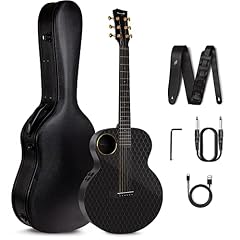
Enya X4 PRO MINI Carbon Fiber 36-Inch 3/4-Size Acoustic-Electric Guitar
- Type
- Acoustic-electric
- Size
- 3/4 or 7/8 size
- Travel or mini
- Yes
$589.99 (as of 10/25/2026 23:46 PDT - Details)
The Enya X4 Pro Mini uses a carbon fiber body, which is lighter and more resistant to humidity changes than traditional wood. It also includes a pickup for amplified practice, making it a durable and flexible option for frequent travelers.
Pros
- Carbon fiber body resists humidity and temperature changes
- Acoustic-electric with pickup, ready to plug in
- Compact 36-inch (3/4) size fits in many overhead bins
Cons
- No gig bag or case included
- Carbon fiber construction may feel brighter than wood
Good fit if
- Frequent fliers or campers who need a rugged instrument
- Players who want a low-maintenance guitar that does not need humidification
Skip if
- You prefer the traditional look and feel of a wood guitar
- You need a starter kit with accessories
Verdict: A rugged, lightweight acoustic-electric for travelers who want a practically indestructible 3/4 guitar.
3 Best acoustic for beginners

The Yamaha JR1 is a spruce-topped acoustic from a veteran maker with a long history of reliable student instruments. Its compact body and low string tension make it easier for younger players to press down notes cleanly.
Pros
- Spruce top, a common choice for a lively acoustic tone
- No electronics, so no battery or cable needed
- Trusted Yamaha quality and consistent build
Cons
- No gig bag or accessories included
- Steel strings may be harder on fingertips than nylon
Good fit if
- Beginners who want a straightforward acoustic without added complexity
- Young players moving from a smaller child-size guitar
Skip if
- You need an amplifier or pickup
- You prefer the softer feel of nylon strings
Verdict: A simple, reliable 3/4 acoustic that focuses on playability and sound, nothing extra.
4 Best electric starter kit

Fender Squier 3/4-Size Kids Mini Strat Electric Guitar
- Type
- Electric
- Size
- 3/4 or 7/8 size
- Kit or bundle
- Yes
- Amp included
- Yes
- Travel or mini
- Yes
- For kids
- Yes
$299.99 (as of 10/25/2026 23:53 PDT - Details)
This Squier Mini Strat bundle includes an amplifier, cable, and the guitar itself, so a beginner has everything needed to make noise right away. The 3/4 size makes it comfortable for kids and adults with smaller frames.
Pros
- Complete kit with amplifier and instrument cable
- Short scale and narrow neck are easy for small hands
- Electric body is lightweight and easy to hold
Cons
- Requires an amplifier to be heard acoustically
- Includes only the essentials, no tuner or picks mentioned
Good fit if
- Young guitarists who want to play rock or pop with effects
- Travelers who want a compact electric that can be practiced silently with headphones (if amp has jack)
Skip if
- You prefer an acoustic guitar with no external gear
- You need a full-size electric guitar
Verdict: A ready-to-rock 3/4 electric package that takes the guesswork out of buying a first electric guitar.
5 Best 3/4 bass

Fender Mini Precision Bass Guitar
- Type
- Bass
- Size
- 3/4 or 7/8 size
- Kit or bundle
- Yes
- Travel or mini
- Yes
- For beginners
- Yes
- For kids
- Yes
$209.99 (as of 10/25/2026 23:52 PDT - Details)
The Fender Mini Precision Bass gives bassists a short-scale instrument that is easier to reach across and lighter to carry. Its familiar P-Bass design and passive electronics fit standard bass habits without a bulky body.
Pros
- Short scale (3/4) reduces hand stretch for small or tired hands
- Passive single-coil pickup requires no battery
- Compact body is easy to transport and store
Cons
- No amplifier or cable included
- Narrow string spacing may not suit players with large fingers
Good fit if
- Bass players who need a travel-size instrument
- Younger players who want to start on bass
Skip if
- You need a bass with an active preamp
- You already own a full-size bass and want the same feel
Verdict: A practical short-scale bass that keeps the classic Precision Bass tone in a travel-friendly size.
6 Best classical for advancing players

Kremona Soloist S62C OP 7/8 Size Beginner Classical Guitar
- Type
- Classical or nylon
- Size
- 3/4 or 7/8 size
- Solid top
- Yes
- For beginners
- Yes
$449.00 (as of 10/26/2026 00:46 PDT - Details)
The Kremona Soloist is a 7/8 size classical with a solid cedar top, a feature normally reserved for more expensive instruments. It is handcrafted in Europe and designed for players who want a nuanced nylon-string voice without giving up fingerboard comfort.
Pros
- Solid cedar top is stated to produce rich, warm tone
- Handmade in Europe, according to the product name
- 7/8 size offers a shorter reach than full-size while still sounding full
Cons
- No gig bag or case included
- Nylon strings require a different technique than steel strings
Good fit if
- Classical students who need a serious practice instrument
- Players with small hands who want a premium nylon-string feel
Skip if
- You want a steel-string acoustic
- You are shopping for a beginner on a very limited budget
Verdict: A high-quality classical 3/4 with a solid cedar top, for players who want a responsive nylon-string in a compact size.
7 Best solid-top acoustic

SIGMA Junior 3/4 Size Acoustic Guitar
- Type
- Acoustic
- Size
- 3/4 or 7/8 size
- Travel or mini
- Yes
- Solid top
- Yes
$199.99 (as of 10/26/2026 02:10 PDT - Details)
The Sigma Junior is a 3/4 acoustic with a solid spruce top, a specification typically found on instruments costing more. Its compact body and solid top make it a strong choice for beginners and travelers who want a wood guitar that will open up over time.
Pros
- Solid spruce top provides improved resonance and dynamic range
- Rosewood bridge and Dao back/sides are stated in the name
- Travel-friendly 3/4 size
Cons
- No pickup or electronics
- No gig bag included
Good fit if
- Acoustic players who prioritize tonal response over onboard electronics
- Travelers who like a traditional wood-bodied guitar
Skip if
- You need to plug into an amplifier
- You prefer a nylon-string classical sound
Verdict: A budget-friendly solid-top acoustic with a lively sound and compact dimensions.
8 Best student classical

The Yamaha CGS103A is a 3/4 classical guitar with nylon strings, a combination that is gentle on fingertips and easy to press down. Yamaha builds a large range of student instruments, and this model is a standard recommendation in many lesson programs.
Pros
- Nylon strings are softer on the fingers
- 3/4 size is comfortable for children and small adults
- No electronics to break or replace
Cons
- No case or gig bag included
- Nylon strings produce a quieter, mellower volume than steel
Good fit if
- Young students taking classical or flamenco lessons
- Adults who want a gentler instrument to start on
Skip if
- You want a bright, strummy steel-string sound
- You need to amplify your guitar
Verdict: A reliable, comfortable classical 3/4 that focuses on easy playability and a warm tone.
9 Best nylon-string acoustic

Fender CN-30 Nylon String 3/4-Size Acoustic Guitar
- Type
- Classical or nylon
- Size
- 3/4 or 7/8 size
$199.99 (as of 10/25/2026 23:52 PDT - Details)
The Fender CN-30 is a 3/4 nylon-string acoustic that bridges the gap between classical and steel-string guitars. It has a narrower neck than many classical models, which can make it easier for players coming from steel-string acoustic to transition.
Pros
- Nylon strings with a familiar acoustic body shape
- Walnut fingerboard adds a distinct look
- 2-year warranty included, as stated in the product name
Cons
- No electronics or pickup
- No gig bag or accessories included
Good fit if
- Players who want a softer string feel without the full classical neck width
- Those who like the Fender brand and prefer a 3/4 scale
Skip if
- You need a classical guitar with a traditional 50mm nut width
- You plan to play amplified
Verdict: A well-made nylon-string 3/4 that suits fingerpicking and relaxed strumming.
10 Best compact acoustic for small frames

The Ibanez PF2MH is a straightforward 3/4 acoustic with a natural wood finish. It has no extra features, but its simple, solid construction and comfortable size make it a dependable choice for players who want a no-frills acoustic to keep around.
Pros
- Compact 3/4 size
- No electronics simplifies handling
- Ibanez is an established guitar brand
Cons
- No gig bag or kit included
- Steel strings may require a bit of finger strength
Good fit if
- Players who want a spare acoustic for the office or bedroom
- Those who already own accessories and need just the guitar
Skip if
- You need a pickup or tuner built in
- You prefer a nylon-string classical
Verdict: A clean, no-extras 3/4 acoustic that gets the job done for casual practice.
11 Best beginner acoustic-electric kit

Vangoa 3/4 Electric Acoustic Guitar Kit for Beginner
- Type
- Acoustic-electric
- Size
- 3/4 or 7/8 size
- Kit or bundle
- Yes
- For beginners
- Yes
$169.99 (as of 10/26/2026 02:44 PDT - Details)
The Vangoa 3/4 Electric Acoustic Guitar Kit pairs a spruce-top guitar with a 4-band EQ and includes the accessories a beginner needs. With a pickup and preamp, it lets new players explore amplification without buying extra gear separately.
Pros
- Includes a 4-band EQ for tone shaping
- Complete kit with accessories (as stated in the product name)
- Acoustic-electric design is versatile
Cons
- Brand may be less familiar than older makers
- EQ adds complexity for absolute beginners
Good fit if
- Beginners who want to try both acoustic and electric sounds
- Players who expect to play through an amplifier or PA
Skip if
- You want a purely acoustic instrument with no electronics
- You prefer a classical nylon-string feel
Verdict: A practical all-in-one 3/4 acoustic-electric kit that supports your first plugs-in performance.
12 Best compact acoustic-electric with tuner

Donner 3/4 Acoustic Electric Guitar 36'' with Built-in Pickup & Tuner
- Type
- Acoustic-electric
- Size
- 3/4 or 7/8 size
The Donner 3/4 Acoustic Electric Guitar has a built-in pickup and tuner, a rare feature at this size. That integrated tuner makes it easier to stay in tune without carrying a separate device, and the 36-inch body is easy to manage.
Pros
- Built-in tuner helps you stay in tune without extra gear
- Acoustic-electric with pickup
- Compact 36-inch (3/4) body
Cons
- No gig bag or kit included
- Tuner may require a coin or small tool to access the battery (not specified)
Good fit if
- Players who want a self-contained travel guitar with a tuner
- Those who practice quietly with headphones through an amp
Skip if
- You need a full kit with picks and strap
- You prefer a classical nylon-string guitar
Verdict: A convenient 3/4 acoustic-electric with a built-in tuner, perfect for low-maintenance practice.
13 Best classical kit

Admira 6 String Classical Guitar
- Type
- Classical or nylon
- Strings
- 6
- Size
- 3/4 or 7/8 size
- Kit or bundle
- Yes
The Admira ALBA 3/4 PACK is a classical guitar that comes as a kit, meaning it likely includes a case, tuner, or other starter accessories. Its nylon strings are gentle on fingers, and the 3/4 scale is a good middle ground for learners.
Pros
- Classical bundle includes necessary beginner accessories (kit)
- Nylon strings reduce finger pain
- Admira is a Spanish brand with a long classical tradition
Cons
- Exact kit contents are not fully listed in the product name
- Nylon strings produce a quiet sound that may not suit all genres
Good fit if
- Total beginners who want everything in one box
- Students of classical or Spanish guitar
Skip if
- You already have a tuner, case, and strap and only need the guitar
- You want a steel-string acoustic or electric
Verdict: A ready-to-start classical bundle with a trusted Spanish maker and a comfortable 3/4 size.
14 Best left-handed 3/4

Ortega Family Series 7/8 Size Left-Handed Nylon-String Classical Guitar
- Type
- Classical or nylon
- Size
- 3/4 or 7/8 size
- Left-handed
- Yes
$279.99 (as of 10/26/2026 01:33 PDT - Details)
The Ortega Family Series is a 7/8 size left-handed classical guitar with a solid cedar top and a professional gig bag. Left-handed players rarely find a compact nylon-string instrument with this level of specification, making this a standout choice.
Pros
- Left-handed configuration, rare in 3/4 and 7/8 sizes
- Solid cedar top for a warm, responsive tone
- Includes a professional gig bag (as stated in the product name)
Cons
- Nylon strings require a classical technique
- 7/8 size is slightly larger than some 3/4 instruments
Good fit if
- Left-handed classical players who want a compact travel companion
- Students who need a high-quality left-handed instrument
Skip if
- You are right-handed
- You need a steel-string acoustic or electric
Verdict: A well-specified left-handed 7/8 classical with solid wood and a gig bag, a rare find.
15 Best budget classical kit

Pyle 36-Inch Beginner Classical Acoustic Guitar Kit
- Type
- Classical or nylon
- Size
- 3/4 or 7/8 size
- Kit or bundle
- Yes
- For beginners
- Yes
- For kids
- Yes
$72.99 (as of 10/26/2026 01:47 PDT - Details)
The Pyle 36-inch Beginner Classical Guitar Kit is a comprehensive bundle for open-string play and simple chord practice. It includes nylon strings, a kit with accessories, and a compact 3/4 size that is easy for kids and adults to hold.
Pros
- Complete kit with accessories for a first-time player
- Nylon strings are gentle on fingertips
- 3/4 size suits children and small adults
Cons
- Brand is budget-focused and may have less refined construction
- No electronics, so it cannot be amplified
Good fit if
- Parents buying a first guitar for a child
- Adults who want a low-cost instrument to try out classical guitar
Skip if
- You need a solid wood top or premium components
- You plan to perform with any amplification
Verdict: A low-commitment classical guitar kit that gets you started without a large investment.
Specs compared
| # | Guitar | Type | Strings | Size | Left-handed | Kit or bundle | Amp included |
|---|---|---|---|---|---|---|---|
| 1 | Takamine GX18CE Solid Spruce 3/4 Size Taka-mini Acoustic-Electric Guitar | Acoustic-electric | not stated | 3/4 or 7/8 size | not stated | not stated | not stated |
| 2 | Enya X4 PRO MINI Carbon Fiber 36-Inch 3/4-Size Acoustic-Electric Guitar | Acoustic-electric | not stated | 3/4 or 7/8 size | not stated | not stated | not stated |
| 3 | Yamaha JR1 FG Junior 3/4 Size Acoustic Guitar | Acoustic | not stated | 3/4 or 7/8 size | not stated | not stated | not stated |
| 4 | Fender Squier 3/4-Size Kids Mini Strat Electric Guitar | Electric | not stated | 3/4 or 7/8 size | not stated | Yes | Yes |
| 5 | Fender Mini Precision Bass Guitar | Bass | not stated | 3/4 or 7/8 size | not stated | Yes | not stated |
| 6 | Kremona Soloist S62C OP 7/8 Size Beginner Classical Guitar | Classical or nylon | not stated | 3/4 or 7/8 size | not stated | not stated | not stated |
| 7 | SIGMA Junior 3/4 Size Acoustic Guitar | Acoustic | not stated | 3/4 or 7/8 size | not stated | not stated | not stated |
| 8 | Yamaha CGS103A 3/4 Size Classical Guitar | Classical or nylon | not stated | 3/4 or 7/8 size | not stated | not stated | not stated |
| 9 | Fender CN-30 Nylon String 3/4-Size Acoustic Guitar | Classical or nylon | not stated | 3/4 or 7/8 size | not stated | not stated | not stated |
| 10 | Ibanez PF2MH | not stated | not stated | 3/4 or 7/8 size | not stated | not stated | not stated |
| 11 | Vangoa 3/4 Electric Acoustic Guitar Kit for Beginner | Acoustic-electric | not stated | 3/4 or 7/8 size | not stated | Yes | not stated |
| 12 | Donner 3/4 Acoustic Electric Guitar 36'' with Built-in Pickup & Tuner | Acoustic-electric | not stated | 3/4 or 7/8 size | not stated | not stated | not stated |
| 13 | Admira 6 String Classical Guitar | Classical or nylon | 6 | 3/4 or 7/8 size | not stated | Yes | not stated |
| 14 | Ortega Family Series 7/8 Size Left-Handed Nylon-String Classical Guitar | Classical or nylon | not stated | 3/4 or 7/8 size | Yes | not stated | not stated |
| 15 | Pyle 36-Inch Beginner Classical Acoustic Guitar Kit | Classical or nylon | not stated | 3/4 or 7/8 size | not stated | Yes | not stated |
How we chose these
We compiled a pool of 39 3/4 and 7/8 size guitars from the current storefront listings, then folded near-duplicate models (for example, the same guitar in two colors) into single entries. Each remaining guitar was evaluated against its stated specifications: body type, string material, electronics, included accessories, and build features such as solid tops. We did not play or measure any of the instruments. The prices shown on the page are live and were read at the time of writing, but this guide does not compare prices. Our picks reflect the best fit for typical use cases, not the lowest price.
What to look for
Body size: 3/4 vs 7/8 vs full-size
The terms 3/4 and 7/8 describe the overall scale length and body dimensions relative to a standard full-size guitar. A 3/4 guitar typically has a scale length around 23 inches, while a full-size is usually 25.5 inches. That shorter scale means the frets are closer together, making it easier for small hands to form chords. A 7/8 guitar is slightly larger than a 3/4 but still smaller than a full-size, offering a middle ground for players who find a 3/4 too small or a full-size too large.
The Martin body-type guide explains how body shapes affect sound: a smaller body, like a concert or parlor, tends to produce a softer, more balanced tone, while a dreadnought is louder and booms. When you choose a 3/4 or 7/8, you are essentially getting a reduced version of one of these classic shapes. For beginners, the most important thing is that the guitar feels comfortable in your hands; the sound differences are secondary until you develop a sense of tone.
Wood: solid vs laminated tops
The top (or soundboard) is the most important tonal component of an acoustic guitar. A solid top is made from a single piece of wood, while a laminated top has multiple plies glued together. Martin's wood guide notes that the top directly responds to string vibrations through the bridge, shaping volume, attack, and dynamic range. Solid wood generally vibrates more freely and is often preferred by players who want a responsive, evolving instrument. Laminated tops are more affordable and resistant to humidity changes, making them a practical choice for travel or beginners.
In the 3/4 category, you will find both options. The Takamine GX18CE, Sigma Junior, and Kremona Soloist all have solid spruce or cedar tops, which are just as effective at this smaller size. If you plan to keep the guitar for many years, investing in a solid top is worthwhile; if you are buying a first instrument or plan to travel, a laminated top may serve you just as well and cost less.
String type: steel vs nylon
Steel strings are used on most acoustic and electric guitars and produce a bright, projecting sound. They are also harder on the fingertips, which can be painful for beginners. Nylon strings, found on classical guitars, are softer and have a warmer, mellower tone. They are easier to press down, making them an excellent starting point for children or adults with sensitive fingers.
Your choice should also depend on the music you want to play. Steel-string acoustics are common in folk, rock, and pop, while nylon-string classical guitars are used in classical, flamenco, and bossa nova. Some nylon-string guitars, like the Fender CN-30, have a narrower neck that feels closer to a steel-string, easing the transition between string types. If you are not sure which you prefer, try both in a store or consider a guitar that can handle both, though that is rare in the 3/4 category.
Electronics: pickups, preamps, and tuners
An acoustic-electric guitar comes with a pickup and often a preamp, allowing you to plug into an amplifier or PA system. This is valuable for performing, recording, or practicing with headphones. Martin's electronics guide explains that a quality preamp offers volume and tone controls, and some include a built-in tuner or phase switch to reduce feedback.
In the 3/4 segment, several models come with electronics. The Takamine GX18CE, Enya X4, and Donner 3/4 all include pickups, and the Donner adds a tuner. A built-in tuner is convenience you will appreciate, as it eliminates the need to carry a separate device. If you never plan to plug in, a purely acoustic guitar is simpler and often lighter, but having the option costs little extra and can be useful later.
Kits vs bare guitars
Many 3/4 guitars are sold as kits that include accessories like a gig bag, tuner, strap, picks, and sometimes an amplifier. These bundles are ideal for beginners because they remove the guesswork of buying separate items. For example, the Squier Mini Strat kit includes an amp and cable, while the Pyle classical kit comes with the basics all in one box.
If you already own a tuner, strap, strings, and a case, you can save money by buying the guitar alone and adding your own accessories. However, the convenience of a kit is hard to beat for a first instrument. Just check the product listing to see exactly what is included, because the word "kit" can vary: some include a soft case, others include a hard case, and a few may not include picks or a strap despite claiming to be a kit.
Questions
Is a 3/4 size guitar good for adults?
Yes, 3/4 guitars are a popular choice for adults with small hands, travelers who want a compact instrument, or players who prefer a shorter scale length to reduce fatigue. The frets are closer together, making chord changes easier for beginners. Many professional players also keep a 3/4 as a travel guitar. If you are used to a full-size, a 3/4 may take a few minutes to adjust to, but the shorter reach can be very comfortable once you settle in.
What is the difference between 3/4 and 7/8 size guitars?
3/4 and 7/8 are approximate fractions of a full-size guitar's dimensions, though there is no strict industry standard. A 3/4 guitar is generally smaller in body and scale length than a 7/8, which sits between a 3/4 and a full-size. For children or players with very small frames, a 3/4 is often the best fit. A 7/8 offers a slightly larger body and longer scale, which can produce a fuller sound while still being easier to handle than a full-size. Try both if you can to see which feels more natural.
Can I plug a 3/4 acoustic guitar into an amplifier?
Only if the guitar has a pickup or is an acoustic-electric model. Many 3/4 guitars, like the Takamine GX18CE and the Enya X4, come with a pickup and require a standard 1/4-inch instrument cable to connect to an acoustic amp, PA system, or electric guitar amp. If the guitar does not have a pickup, you can purchase an external soundhole pickup or a microphone, but that adds complexity. For easiest setup, choose a model with built-in electronics if you know you will amplify.
How do I choose between steel and nylon strings?
The main factors are comfort and the style of music you want to play. Nylon strings are softer, easier on your fingertips, and produce a round, warm tone. They are typical of classical and flamenco guitar. Steel strings are brighter, louder, and used in most acoustic rock, pop, and folk music. If you are a beginner, nylon strings can help reduce finger pain and allow shorter practice sessions. If your goal is to play along with rock or country songs, a steel-string acoustic is more suitable. You can always switch later, but the guitar itself is set up for one type of string, so it is best to decide early.
Are there left-handed 3/4 guitars?
Yes, though they are uncommon. The Ortega Family Series 7/8 classical guitar in this guide is specifically built for left-handed players. There are also left-handed 3/4 kits from Pyle and a left-handed classical kit in the broader market. If you are a left-handed player, search for the exact model or brand to see if a left-handed version is available. Keep in mind that many 3/4 guitars are sold only in right-handed orientation, so you may need to order directly from a maker or look for a specialty shop.
Update history
- : First published.